

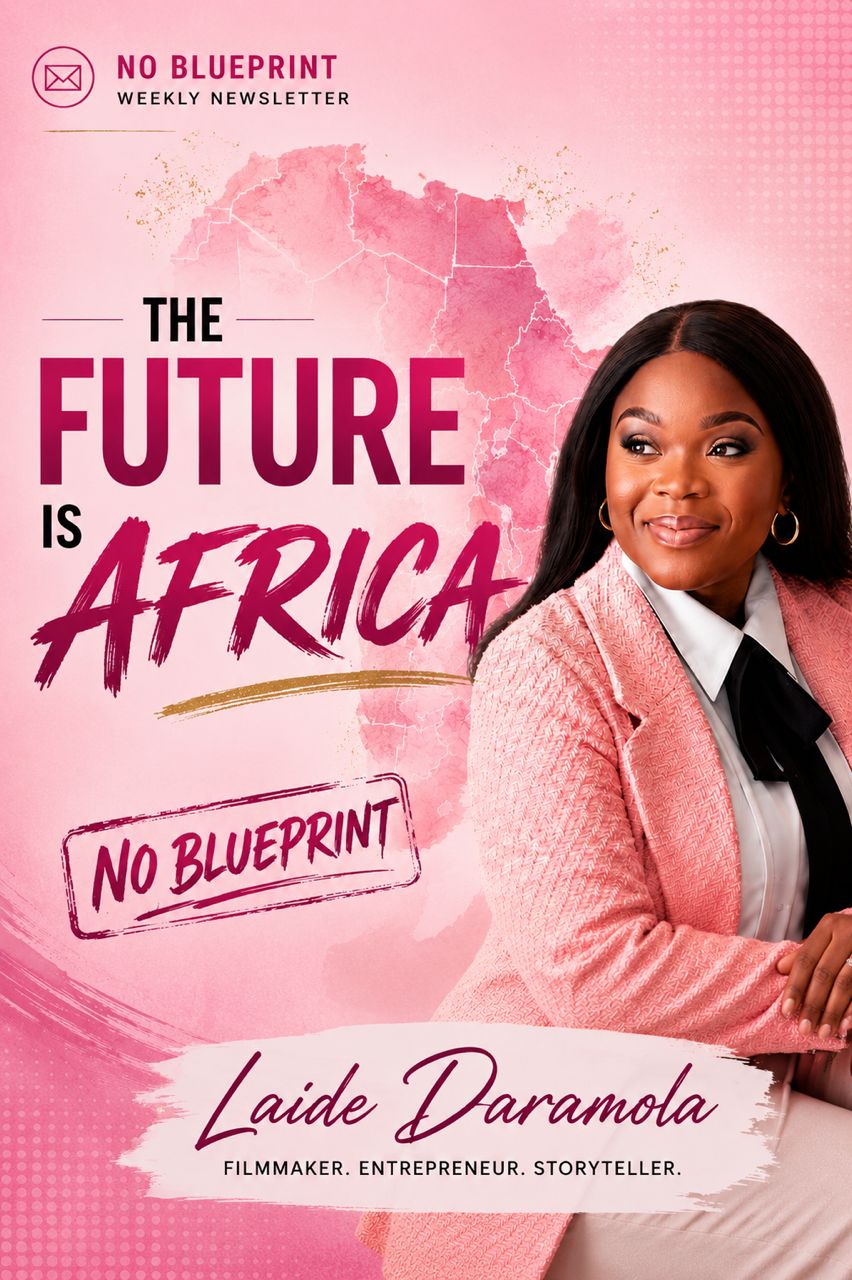
Bottom line: if you’re building a business meant to matter decades from now, Africa isn’t a market to think about later — it’s one to build in today. As a Nollywood producer scaling a studio across borders, I’ve learned that entrepreneurship that overlooks Africa is entrepreneurship planning to arrive late. When entrepreneurs talk about building global businesses, the conversation usually turns to America, Europe, Asia, and increasingly the Middle East. Africa is still too often treated as somewhere to consider later, after a company has already succeeded in what are traditionally considered the major markets.
I think that’s a mistake.
If you’re building a company, brand, studio, or intellectual property that you expect to still matter twenty or thirty years from now, you cannot afford to overlook Africa. And one of the clearest reasons why is demographic.
The Numbers Founders Can’t Ignore
Africa already has the youngest population in the world, with more than 60 percent of its population under the age of 25. By 2050, the United Nations projects that one in every four people on Earth will be African. Think about that from a business perspective. A significant portion of tomorrow’s workforce, entrepreneurs, parents, and consumers will come from this continent.
While many developed economies are dealing with aging populations and shrinking labor pools, Africa is moving in the opposite direction. Its young people are entering adulthood in an increasingly connected, digital world. They will need financial services, education, healthcare, entertainment, housing, transportation, technology, and consumer products. They will build companies and create entirely new categories of business themselves.
For any founder thinking about long-term customer lifetime value, Africa should be part of the conversation now — not twenty years from now, when everyone suddenly realizes how important the market has become.
But population is only part of the story. The cultural shift has already started.
Africa Is Shaping Global Culture, Not Just Joining It
Look at what the world is listening to, wearing, eating, and watching. Afrobeats and Amapiano have become global sounds. African fashion and hairstyles regularly appear in international pop culture. African food is becoming increasingly visible outside the continent. African dances and language travel around the world through social media almost instantly.
This is no longer simply an interesting cultural moment — there is an economic story underneath it. Sub-Saharan Africa’s recorded music revenues grew another 15.2 percent in 2025, reaching $120 million, after already being the fastest-growing recorded-music region in the world in both 2022 and 2023. African culture is no longer sitting on the sidelines of global pop culture waiting to be discovered. It is increasingly helping shape it.
Why African Stories Are Valuable Intellectual Property
As a filmmaker building a global film studio, this is the part of the conversation that means the most to me. When I make an African film, I’m not simply producing content. I’m sharing history.
Our stories document how we live — how our families interact, how we love, what frightens us, what makes us laugh, what we value. They record our weddings, friendships, marriages, faith, ambitions, conflicts, and relationships between generations. They show our homes, our cities, our clothes, our food, and the small cultural details that seem completely ordinary today but may be incredibly important fifty years from now. Imagine someone watching one of today’s Nigerian films decades from now — they may notice the aso ebi at a wedding, the architecture of Lagos, the language people use, or how a younger person addresses an elder. That film will have become a historical record.
This is also why I believe African stories represent enormously valuable intellectual property. The world has watched thousands of versions of Western romances, family dramas, crime stories, and power struggles. Africa brings completely different cultures, traditions, humor, history, mythology, and family dynamics to those same universal emotions.
Netflix’s recent success with The Polygamist is a perfect example. The South African series, based on Zimbabwean author Sue Nyathi’s novel, is rooted in distinctly African relationships and family dynamics — yet that specificity didn’t prevent it from traveling internationally. Netflix reported the series had reached number one in 21 countries, entered the Top 10 in 62 countries, and accumulated 27.6 million views, spending seven consecutive weeks on Netflix’s Global Top 10 Non-English Shows list.
African stories do not have to become less African to become global. Audiences may not personally understand every cultural tradition or family structure on screen, but they understand love, jealousy, betrayal, ambition, family conflict, power, and fear. The emotions are universal. The African setting makes the experience fresh.
We saw something similar with Nigeria’s The Black Book, a thriller that entered Netflix’s global Top 10 for non-English films and stayed on the global chart for weeks after release. These aren’t predictions of what might happen someday for African storytelling as an export. It’s already happening.
The Business Infrastructure Is Already Forming
There is real economic infrastructure emerging around this opportunity. The African Continental Free Trade Area is working toward a more integrated continental market, and the World Economic Forum estimates that market could represent 1.7 billion people and $6.7 trillion in combined consumer and business spending by 2030.
Technology makes this even more interesting for founders and entrepreneurs. In many African markets, consumers effectively leapfrogged desktop-first technology and went directly into a mobile-first economy — banking, payments, commerce, entertainment, and communication increasingly happen through phones. That creates opportunities previous generations of builders simply didn’t have. A filmmaker can distribute beyond traditional cinema. A musician can reach listeners worldwide without depending entirely on traditional gatekeepers. An entrepreneur can build a customer relationship directly through technology.
Of course, Africa is not one market. Fifty-four countries mean different languages, currencies, cultures, regulations, purchasing power, and consumer behavior. Lagos is not Johannesburg. Johannesburg is not Nairobi, and Nairobi is not Accra. Building successfully in Africa requires local knowledge, relationships, and respect for those differences. But complexity is not a reason to ignore opportunity.
The Question Every Founder Should Ask
Whatever you’re building today, ask yourself a simple question: where does Africa fit into my twenty-year strategy?
Maybe Africa becomes a major customer market for your company. Maybe you hire from its growing talent pool. Maybe African creators become your collaborators. Maybe you invest in African companies. Maybe African stories become part of your content strategy. Or maybe your first step is simply paying attention — studying the markets, building relationships, understanding the cultures, watching where young consumers are going.
One of the biggest mistakes founders make is building only for the world that exists today instead of preparing for the world that’s coming. And the world that’s coming will be increasingly African.
Africa is not waiting to become relevant to the future. Africa is already shaping it. The question is whether those of us building today will recognize it early enough to build with it.
Where does Africa currently fit into your business or industry’s long-term strategy? I’d love to hear your perspective in the comments.