

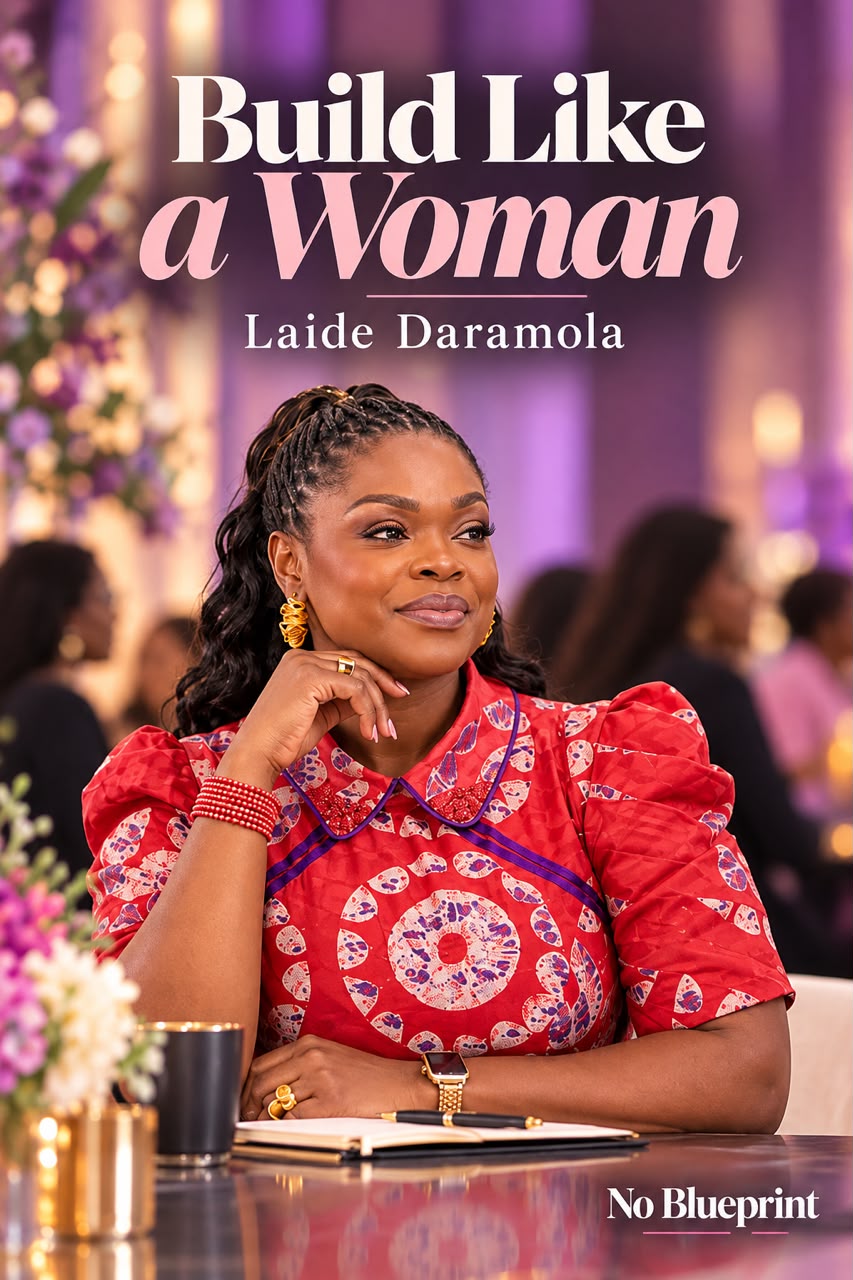
Bottom line: African women leaders don’t need to become harder, colder, or less feminine to build powerful businesses — real leadership comes from strategy and execution, not from mimicking a traditionally masculine mold. For a long time, the image of a successful builder, founder, or CEO has been shaped around a very narrow idea of leadership. Be aggressive. Be dominant. Be unshakable. Be hard. Be ruthless when necessary. And for many women entering business — whether in film, tech, retail, or any other field — there’s been an unspoken pressure to prove they can operate the same way.
I don’t believe a woman has to become harder, colder, louder, or less feminine in order to build something significant. Being a woman is not something you have to overcome before you can become powerful. In fact, some of the very qualities women are often encouraged to suppress can become extraordinary advantages when they’re combined with discipline, strategy, courage, and execution.
That doesn’t mean women are automatically better leaders than men, or that every woman leads the same way. It means there’s no single personality required to build a successful company, lead a large team, raise capital, manage complex operations, or create something that lasts. You do not have to build like a man to build something powerful. You have to learn how to build powerfully as yourself.
Resourcefulness Is an Underrated Superpower
One of the strongest attributes I see in women who build successfully is resourcefulness. Many have learned how to make something happen without having every resource they’d ideally want. They learn how to stretch budgets, negotiate partnerships, maximize small teams, leverage relationships, and make difficult decisions about where money should and shouldn’t be spent.
That kind of discipline matters. A business can look successful publicly while being financially unhealthy privately. Revenue can be growing while cash is disappearing. A founder can be raising money while still building an operation that can’t sustain itself. Resourceful women builders understand that more money doesn’t fix every problem — sometimes the real question is whether the business knows how to use what it already has. The ability to ask, “What can I do with what is currently in my hands?” is one of the most important skills any founder can develop.
Selling the Vision Is Leadership, Not Just Marketing
Another powerful attribute is the ability to sell a vision. Every founder is selling something long before the final product reaches the customer — to investors, to employees, to partners, to customers, and sometimes to yourself during the seasons when the results aren’t yet visible.
The strongest women builders understand that storytelling is not simply marketing. It is leadership. People need to understand where you’re taking them. A powerful founder can explain not only what she’s building, but why it matters, who it serves, what problem it solves, and why the opportunity is worth paying attention to. That clarity can attract capital, attract talent, create loyalty, and turn an ordinary product into a movement people want to become part of. But vision alone isn’t enough — eventually, the story has to be supported by execution.
Empathy and Accountability Can Coexist
This is where another important strength comes in: empathy paired with accountability. Women are often told that empathy makes them good leaders, but I think we need to go further than that. Empathy without standards can become dysfunction.
You can understand that someone is having a difficult season and still require them to do their job. You can care deeply about your employees and still make a difficult personnel decision. You can listen carefully to your team without surrendering leadership of the company. Compassion and accountability can exist in the same room. Some of the best leaders create environments where people feel seen, respected, and valued, while everyone still understands that results matter. That balance allows a woman to lead without pretending she doesn’t care about people, while also avoiding the trap of letting relationships override responsibility.
Resilience as Strategic Creativity
Another attribute women builders often develop is resilience through non-linear problem solving. Building rarely happens according to the original plan. The investor says no. The distributor passes. The client changes direction. The partnership you thought would open the door doesn’t work out. A launch gets delayed.
Strong founders learn not to interpret every closed door as the end of the road. They ask another question: what is the other route? If the front door is closed, can I build a partnership? Can I go directly to the customer? Can I change the distribution model? Can I leverage the audience I already have? This is where resilience becomes more than simply enduring hardship — it becomes strategic creativity. You stop seeing setbacks as verdicts and start seeing them as information.
That mindset has been important throughout my own journey building as a founder. Some of what I’m building today exists because the original route didn’t work. Instead of accepting that as the final answer, I had to ask what another route could look like. Sometimes the obstacle forces you to build the thing that should have existed in the first place.
Long-Range Thinking Separates Moments From Movements
Women builders can also be extremely strong at long-range thinking. Growth matters, but sustainable growth matters more. A mature founder eventually stops asking only, “How quickly can this become bigger?” and begins asking, “What happens when it does?”
Do we have the infrastructure? Have we protected the intellectual property? Are the contracts right? Are the systems strong enough? Can the team handle the next level of complexity? Are we building something that can survive beyond the founder’s constant intervention? These questions aren’t glamorous, but as a film producer and CEO building a company of my own, they’re the ones I return to most often — and they’re what separate businesses that experience moments of success from organizations that can sustain it.
Building an Ecosystem, Not a Contact List
There’s also enormous power in relationship building. Women are often encouraged to network, but networking itself isn’t the goal — the goal is to build an ecosystem. There’s a difference between collecting contacts and building trusted relationships.
A strong ecosystem can create access to information, introductions, capital, talent, opportunities, distribution, partnerships, and rooms you may never enter alone. The strongest relationships are reciprocal — built by showing up, contributing value, sharing opportunities, and helping others succeed, not by constantly asking people for something. Many of the most important doors in business eventually open because somebody is willing to say your name when you’re not in the room. That kind of trust cannot be manufactured overnight.
Strength and Softness Are Not Opposites
Perhaps that’s one of the biggest lessons in building like a woman: you do not have to choose between strength and softness.
You can be feminine and formidable. You can be kind and decisive. You can be collaborative and ambitious. You can nurture people and still demand excellence. You can listen carefully and still make the final decision. You can care deeply and still walk away when something is no longer right for the business.
Softness is not weakness. Empathy is not weakness. Femininity is not weakness. And leadership does not require women to erase those qualities in order to be respected.
The goal should never be to prove that women can build exactly like men. The goal is to create enough room in business for women to build as themselves and still be recognized as serious operators, investors, executives, creators, and leaders. There is no single blueprint for what power is supposed to look like.
So build with discipline. Build with courage. Build with wisdom. Build relationships. Understand your numbers. Protect your vision. Hold people accountable. Learn when to pivot. Learn when to stand your ground.
But don’t believe that becoming more powerful requires becoming less of a woman.
Build like a woman. Not because women have something to prove, but because there’s power in learning to build without apologizing for who you are.
I write from my own experience as a film producer, strategic leader, and founder — but every lesson here transfers, whether you’re building a company, a creative career, a team, or a life’s work in any field. The specifics change. The discipline it takes to build something great does not.
Which of these qualities has served you most as a builder or leader — resourcefulness, empathy, resilience, or something else? I’d love to hear your take in the comments.